


Buying a used press brake is not about finding the biggest tonnage on a listing. It is about whether the ram tracks true, the backgauge repeats, the control still runs your jobs, and the hydraulics stay dry under load. Miss those, and you buy a rebuild instead of a bender.
We buy and sell press brakes every week out of a 225,000 sq ft showroom and ship nationwide. Here is what to check first — tied to machines that are on the floor today.
Start under power, not from a brochure
Cold photos hide limp axes and dead soft keys. Put the machine under power. Cycle the ram. Jog X and R. Open a program (or a test bend). Watch for fault codes, noisy pumps, and a backgauge that hunts. If the seller will not demo it, price that risk into the deal — or walk.
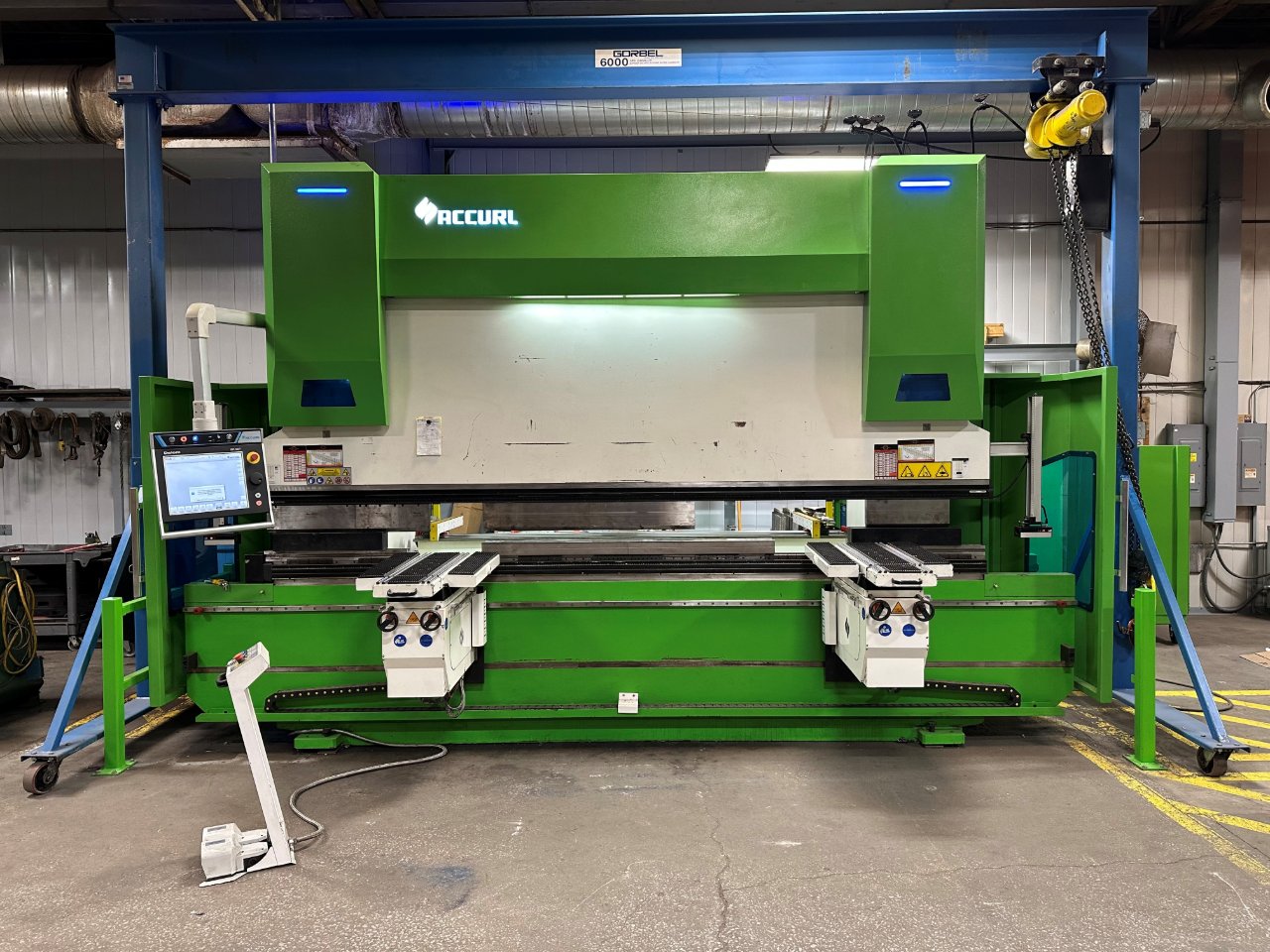
A late-model unit like this Accurl Genius 350T (350 ton x 13′, 2021) — Delem DA66T, X/R/Z1/Z2 backgauge, Wila hydraulic clamping, CNC crowning — is the kind of brake where a live demo settles half the argument. The listing notes very low hours and use; still verify that under power, not from a claim alone.
Ram, bed, and tooling: look for truth in the iron
Stand at the center and look down the bed. Score marks, mushroomed punch tips, and uneven wear tell you how it was run. Check hydraulic clamping (Wila or equivalent) for sticky pins and oil films. Crowning should move cleanly if it is CNC; manual crowning should not be frozen solid.
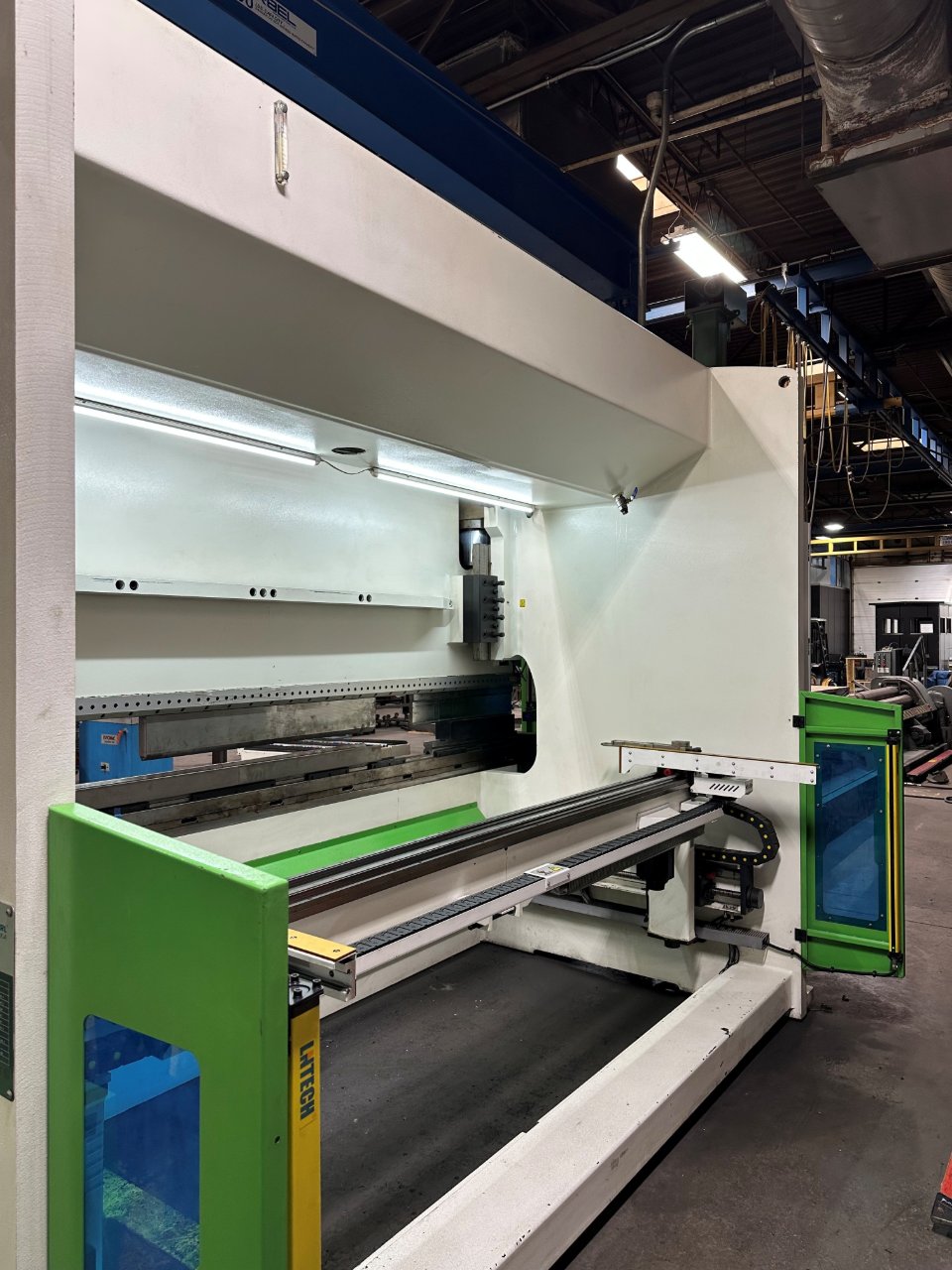
Bring a straightedge or dial if you can. A bed that looks fine from ten feet can still print angle error at the ends. Ask what upper and lower tooling goes with the sale — a “complete set” and a half-empty rack are different machines.
Backgauge: axes, fingers, and repeatability
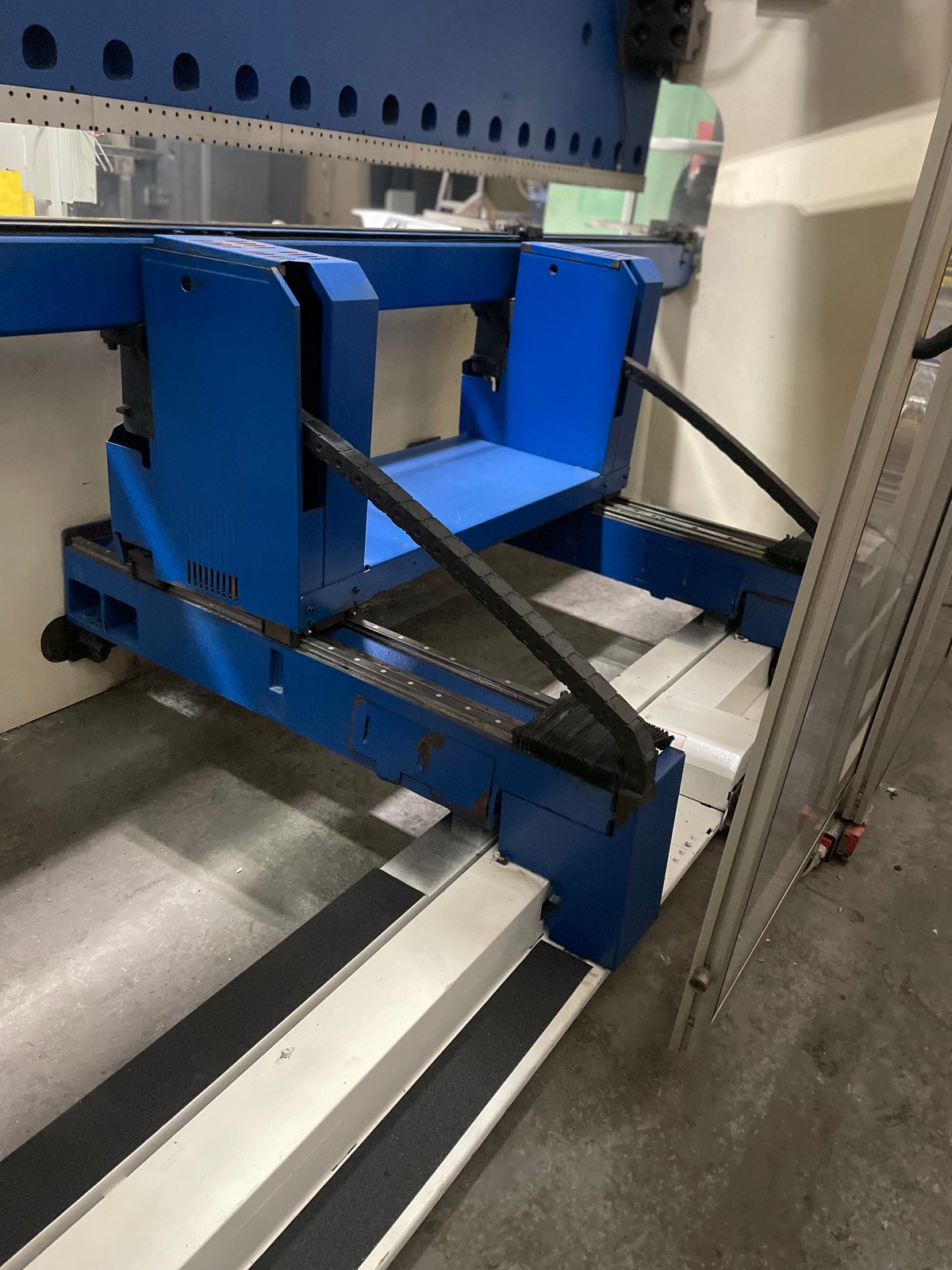
Tonnage gets the headline. Backgauge keeps parts in tolerance. Confirm which axes you are buying (X/R only vs Z1/Z2, I-axis die shift, and so on). Jog to stops. Listen for binding. Look at the linear rails and drag chains for dry spots, chips packed in the ways, or cracked carriers.
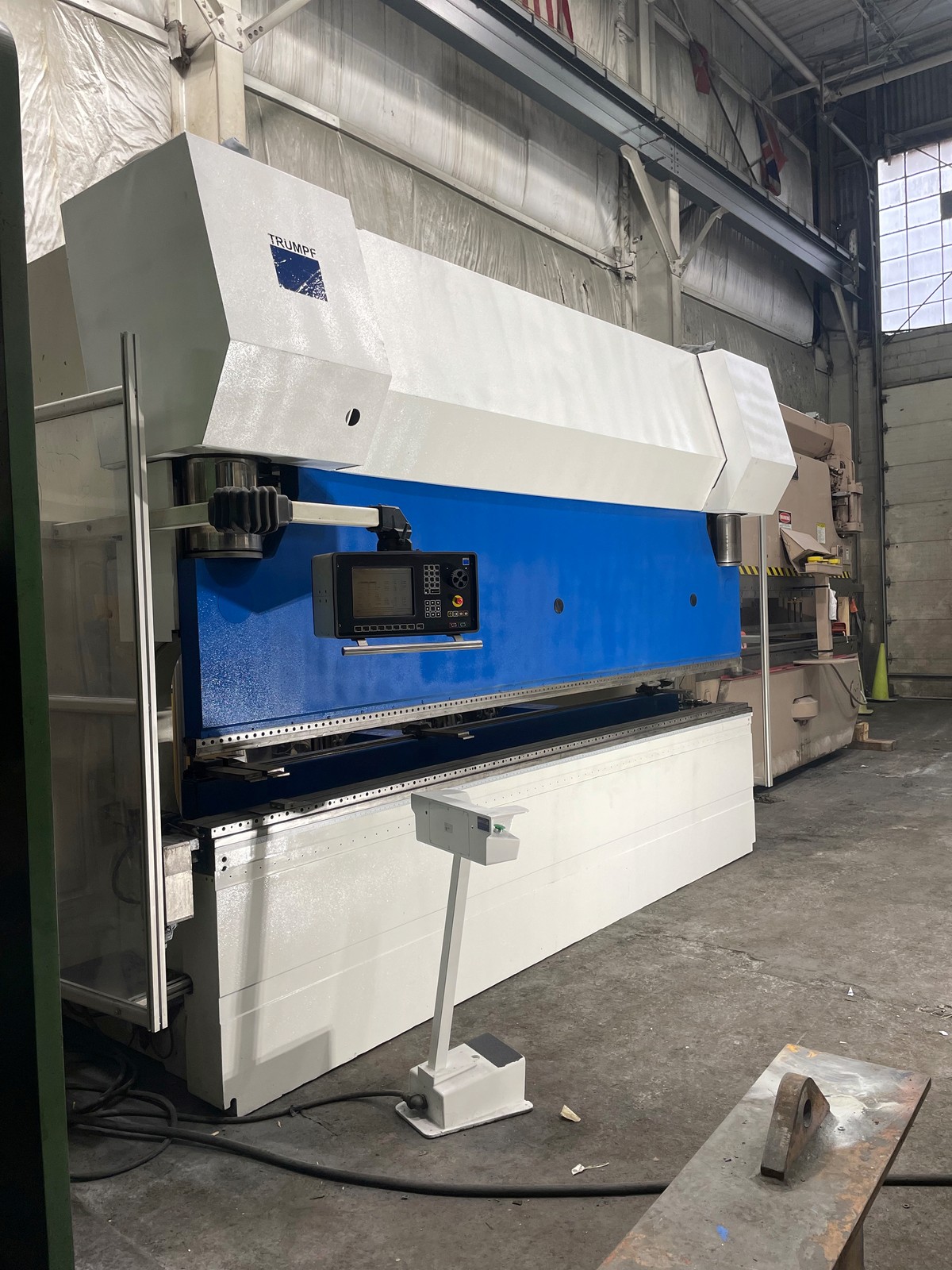
Our Trumpf Trumabend V320 (352 ton x 14′) is a different class of iron than a light-duty shop brake: Trumpf/Delem multi-axis control, automatic crowning, hydraulic tool clamping, light curtains. Year on the plate is 2002 — so pay extra attention to control health, oil condition, and whether the backgauge still repeats under power.
Control and hours: what the screen actually says
Read the control nameplate and the software version on screen. Upgrades matter. A 2009 frame with a later control is a different buy than a sealed, obsolete pendant you cannot get parts for. Note hours if the control reports them — and treat seller “low hours” talk as a claim until the demo proves it.
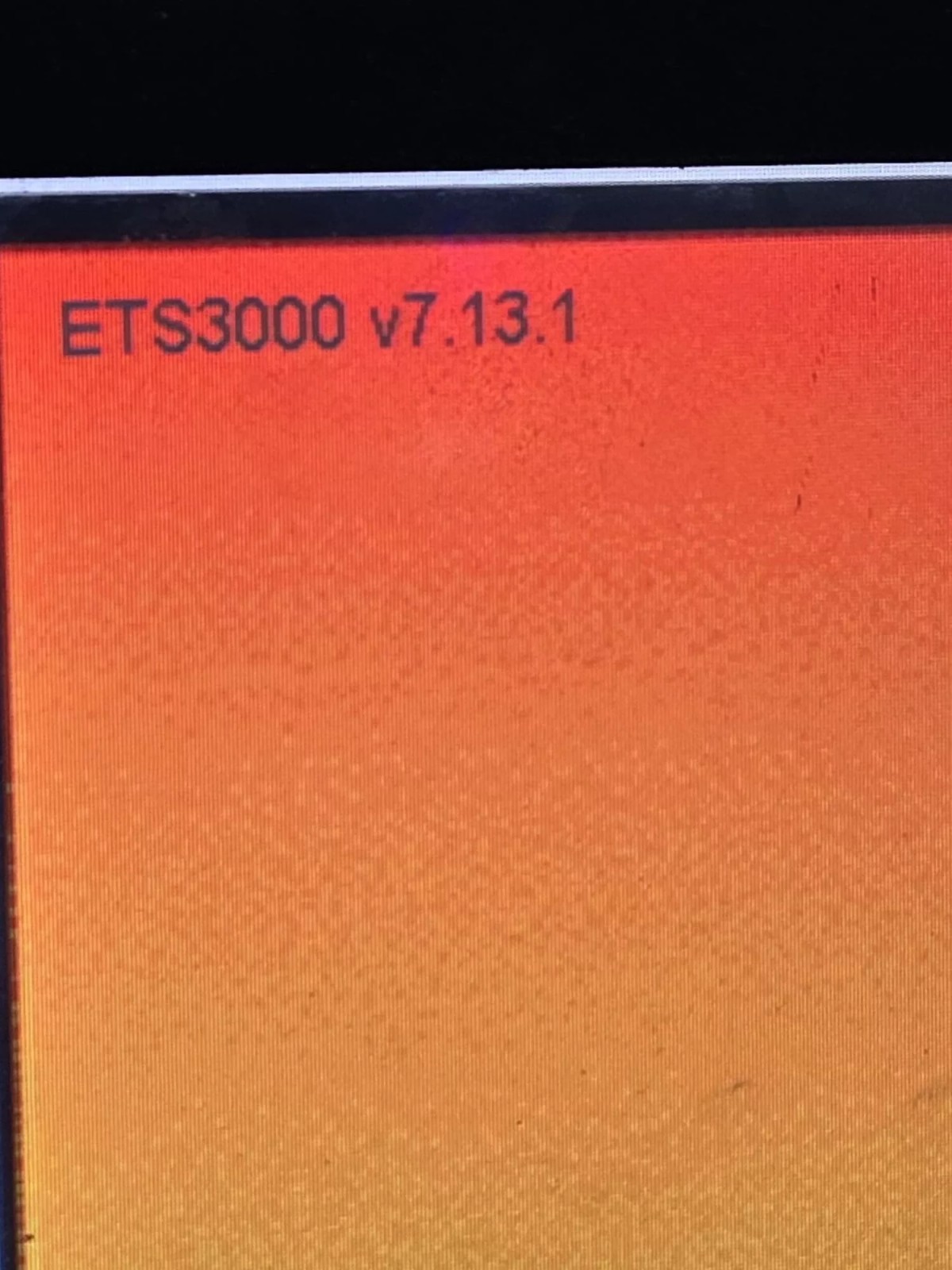
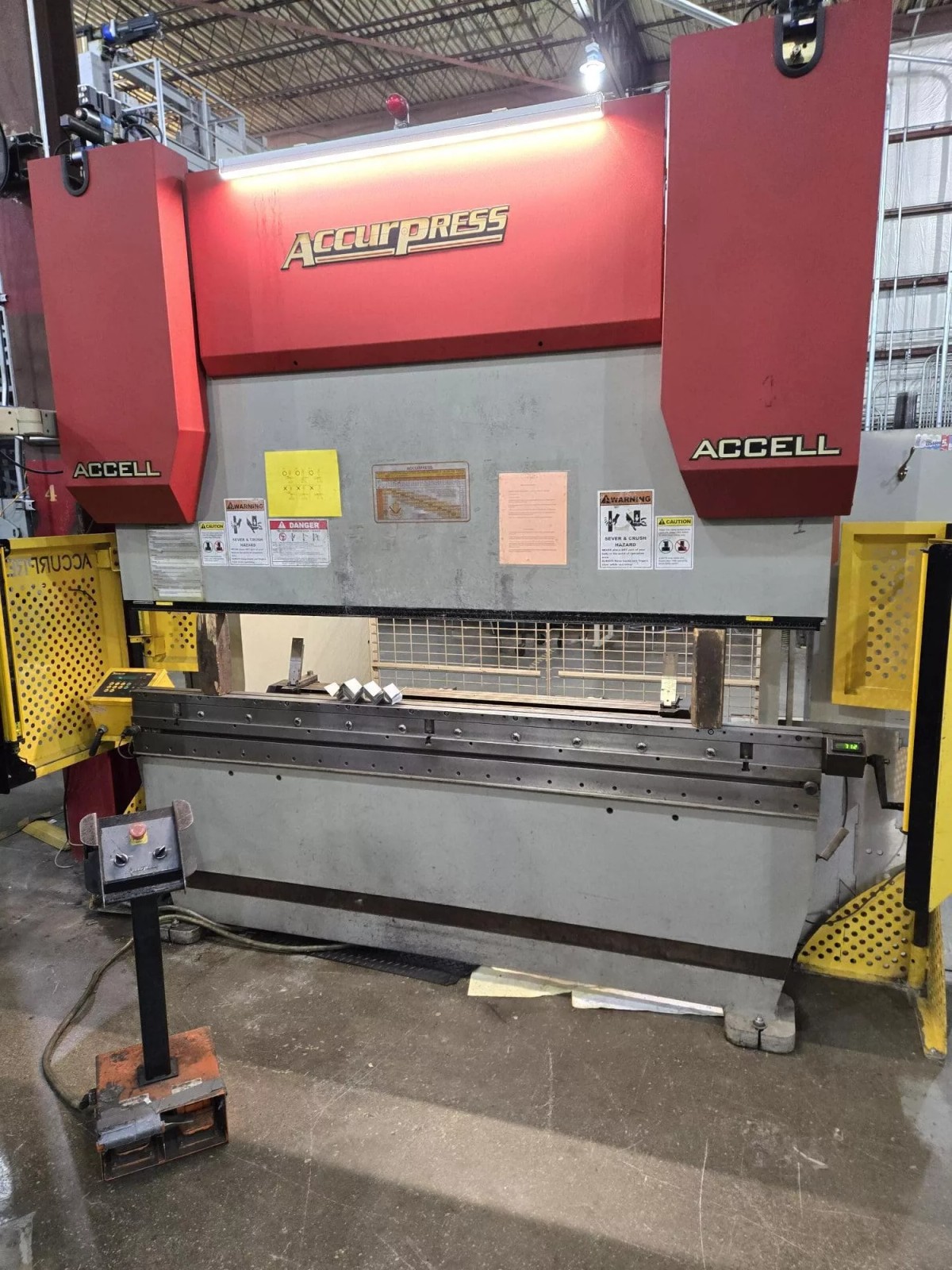
The Accurpress Accell 5908 (90 ton x 8′, 2009) on our floor is a shop-size brake with 6-axis (Y1/Y2/X/R/Z1/Z2), ETS 3000 (upgraded in 2017 per the listing), Merlin light curtains, and Wila upper hydraulic clamping. Smaller footprint, still the same inspection order: power on, jog axes, check clamps, look for leaks.
Hydraulics and the cabinet: leaks and rats’ nests
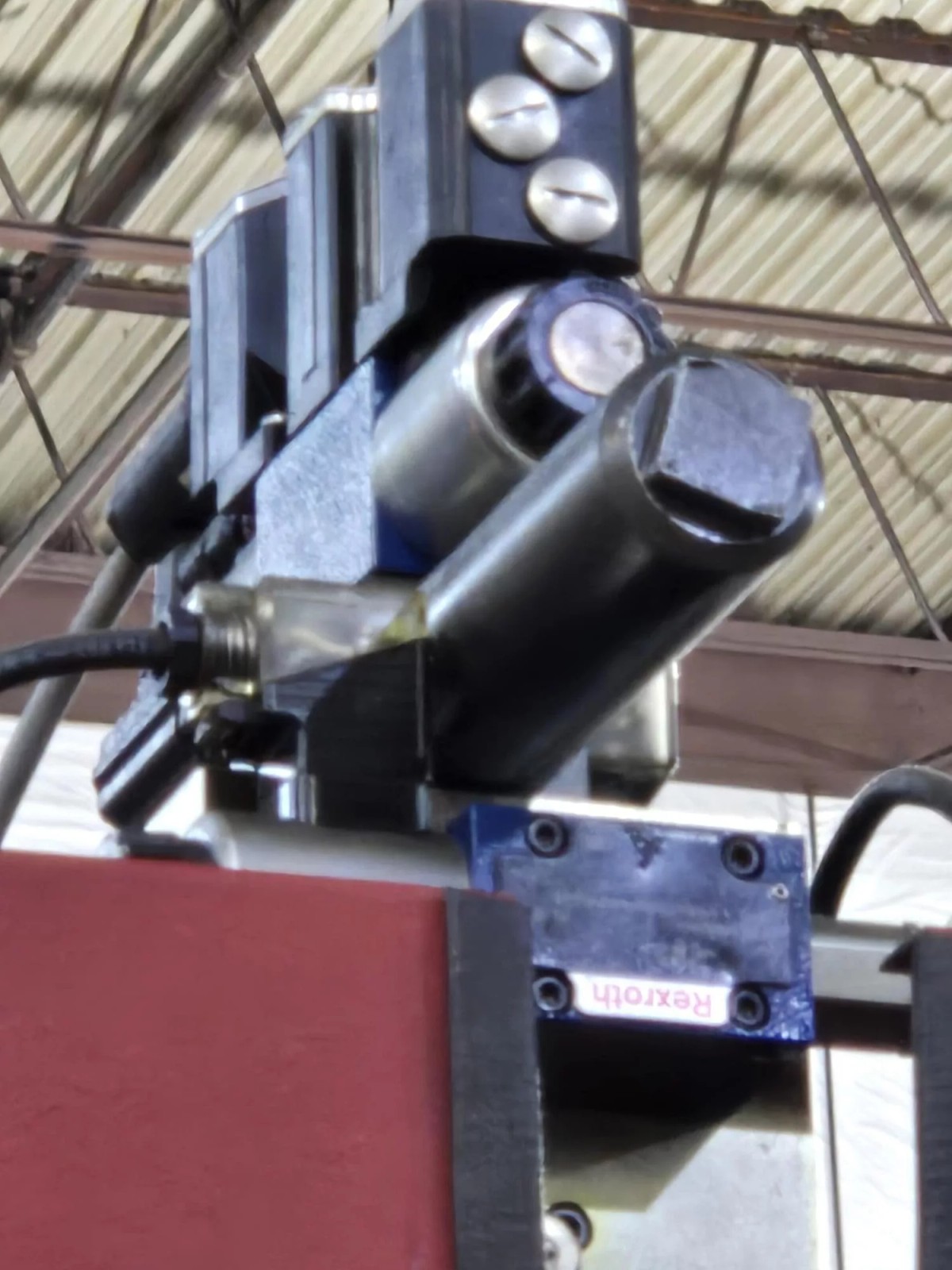
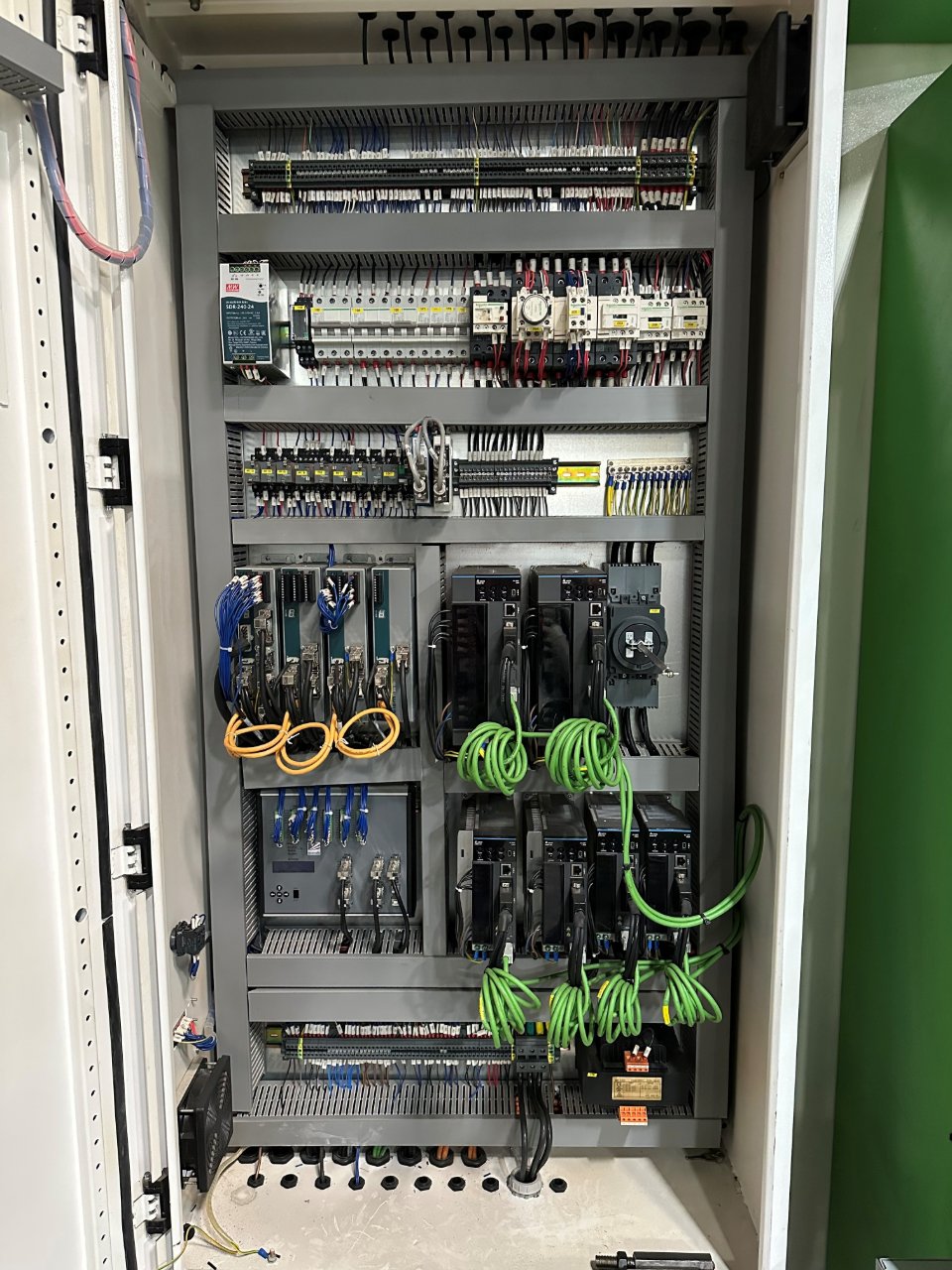
Look at the valve stack and cylinders for fresh oil, wet fittings, and dried varnish. Open the electrical cabinet if the seller will let you. Clean bundling and labeled drives beat a spaghetti box every time. Burnt smell, missing covers, or loose earth straps are not cosmetic.
Match tonnage and length to the work you actually run
Buy capacity for the parts you form, with margin — not for the biggest number on the internet. Distance between housings, open height, and throat depth kill more jobs than peak tonnage. Compare live stock across sizes on our used press brakes page rather than shopping one lonely listing.
- Heavy CNC forming: Accurl Genius 350T or Trumpf Trumabend V320 when you need long bed and multi-axis gauging.
- Shop / mid-size work: Accurpress Accell 5908 when 90 ton x 8′ covers the book without parking a 50,000 lb machine you will never fill.
- Always: demo under power, photograph the control version, and walk the backgauge rails yourself.
Shot list to bring (or demand)
- Wide front under power — control lit, foot pedal in frame
- Ram and bed with tooling installed; crowning visible if fitted
- Backgauge from the rear — rails, fingers, drag chains
- Control screen close-up (software version / hours if shown)
- Hydraulic stack and oil tank area for leaks
- Electrical cabinet door open
Same discipline applies to mills and lathes. We covered the CNC version here: what to inspect before you buy a used CNC. Capital math for used vs new: used vs new CNC.
Sell us your brake — or shop what is live
Clearing a brake off your floor? Start at sell machinery — make, model, year, tonnage x length, control, tooling, and whether it is under power. Buying instead? Browse used press brakes and the full used machinery inventory. Stock turns. If you do not see the capacity you need, ask — we will look.
Sign Up for Our Newsletter
Sign up for our newsletter using the form below to get company insights and updates directly in your inbox!