


An auction can get you a used CNC for less money up front. A dealer can get you a machine you have actually seen run. Which one is cheaper depends on what you find out after the hammer drops.
We buy and sell used CNC machines every week out of a 225,000 sq ft showroom and ship nationwide. Here is how to decide where to buy, using machines that are on our floor this week.
The real difference: what you can verify before you pay
Most auctions sell as-is, where-is. You may get a preview day. You may not get power. You almost never get to cut a part. When the lot closes, the machine is yours, along with whatever is wrong with it.
With a dealer, you can ask for a demo, timer screens, and close-up photos, and you can come look. That is the thing you are paying for. Not a nicer photo. Fewer unknowns.
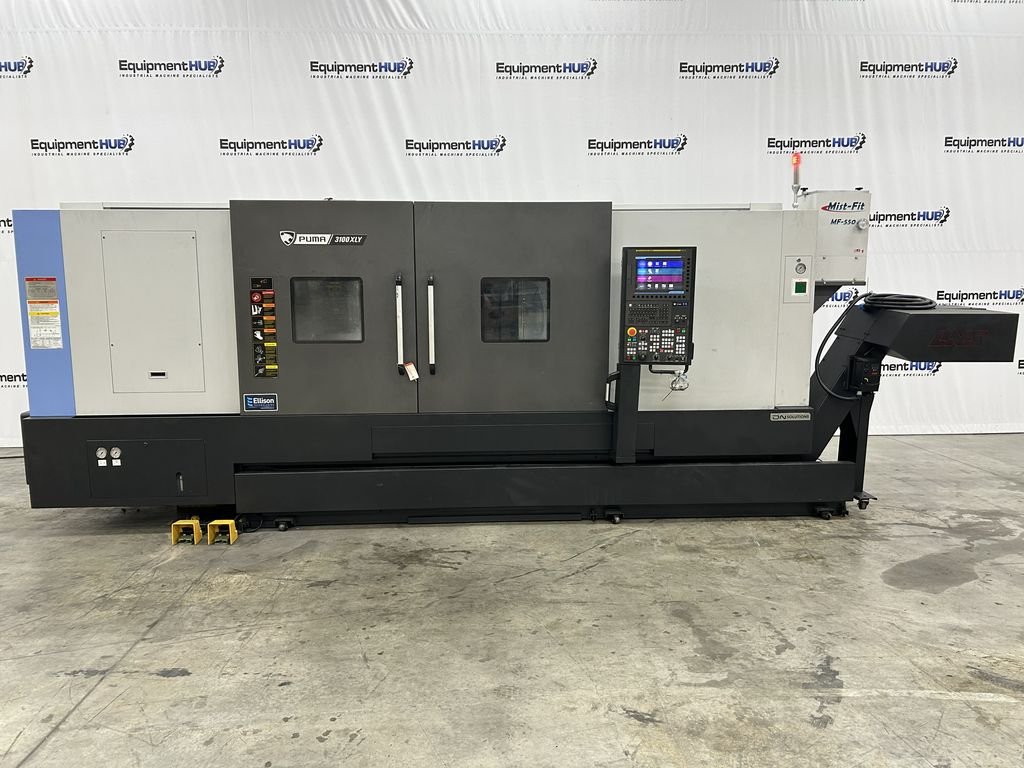
Our DN Solutions Puma 3100XLY (2022) is a good example. It is an X/Z/Y/C turning center with live tooling, a 12-station turret, a 4.02″ bar capacity, an LNS steady rest on a programmable slide, and a chip conveyor. You can see it under power before you commit. At an auction, you would be guessing from a lot photo.
Timers and hours: get the screen, not the story
Hours are the first thing an auction listing leaves out and the first thing a buyer should ask for. Ask for a photo of the timer page on the control, not a typed number in a description.
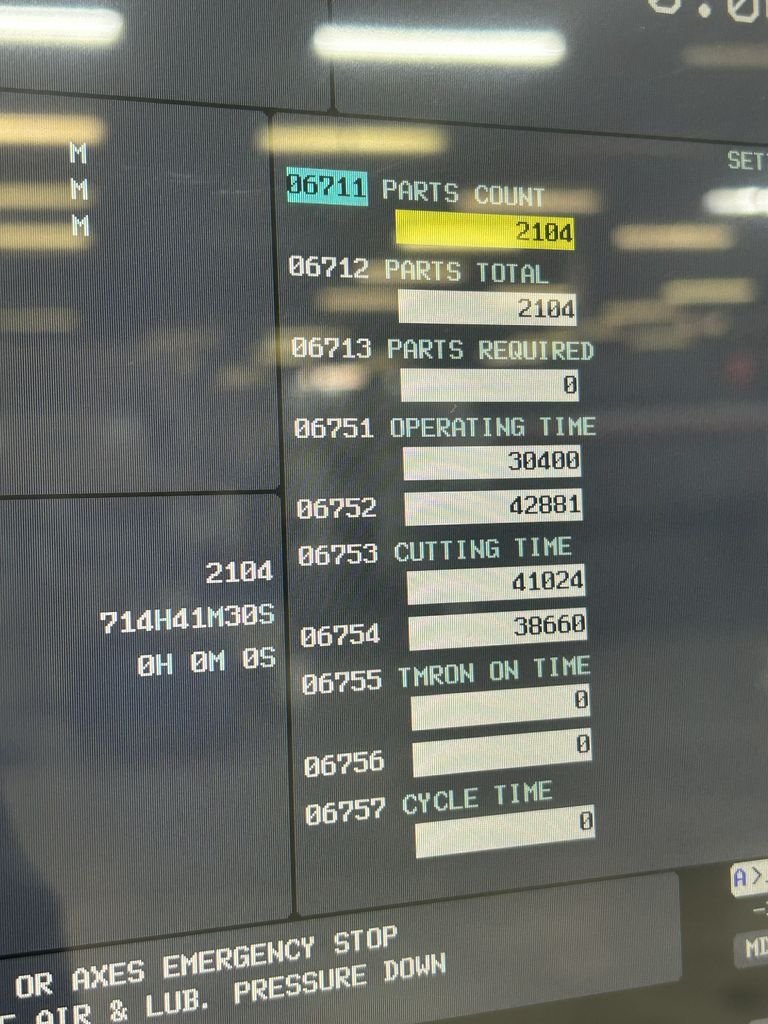
On the Puma, the listing shows 644 cutting hours, 714 run hours, and 4,302 power-on hours. Low cutting time on a 2022 machine is the kind of detail that changes the price. It is also the kind of detail you can only trust when you can see the screen.
Auction costs that do not show up in the hammer price
The winning bid is not your price. Before you bid, add up the rest:
- Buyer’s premium. Most auctions add one on top of the bid. Read the terms for the exact rate.
- Removal deadline. You usually have a short window to get the machine out. Miss it and you may pay storage or lose the lot.
- Rigging and disconnect. Someone has to disconnect, load, and secure it. On a 20,000 lb lathe that is a real bill, and the auction will not do it for you.
- Freight. Price it before you bid, not after.
- Missing pieces. Chucks, tooling, manuals, and option keys do not always go with the lot. Ask what is included in writing.
- The repair you could not see. No power at preview means you find the alarm when it lands on your floor.
Sometimes the auction still wins on total cost. Sometimes it does not. Do the math with every line filled in.
Look inside before you trust the outside
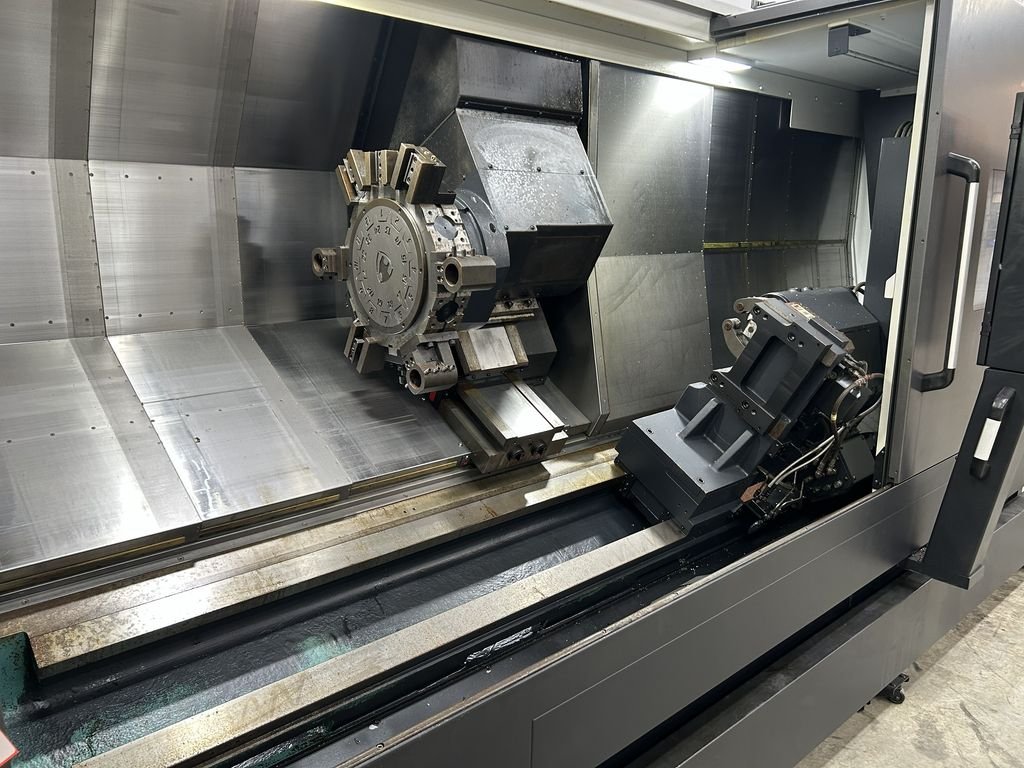
A clean enclosure tells you someone wiped it down. The work area tells you how it was run. Look at the turret, chuck, and ways for crashes, packed chips, and coolant damage.
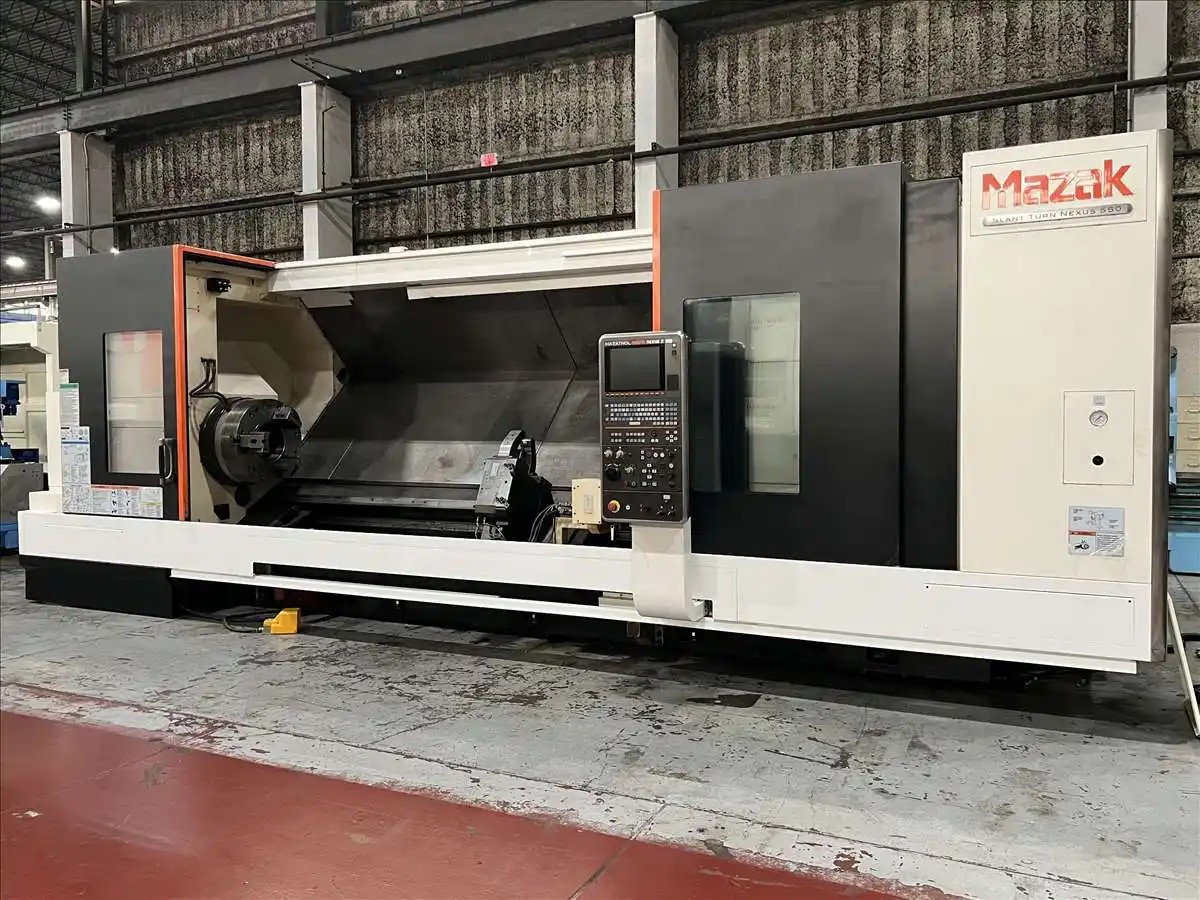
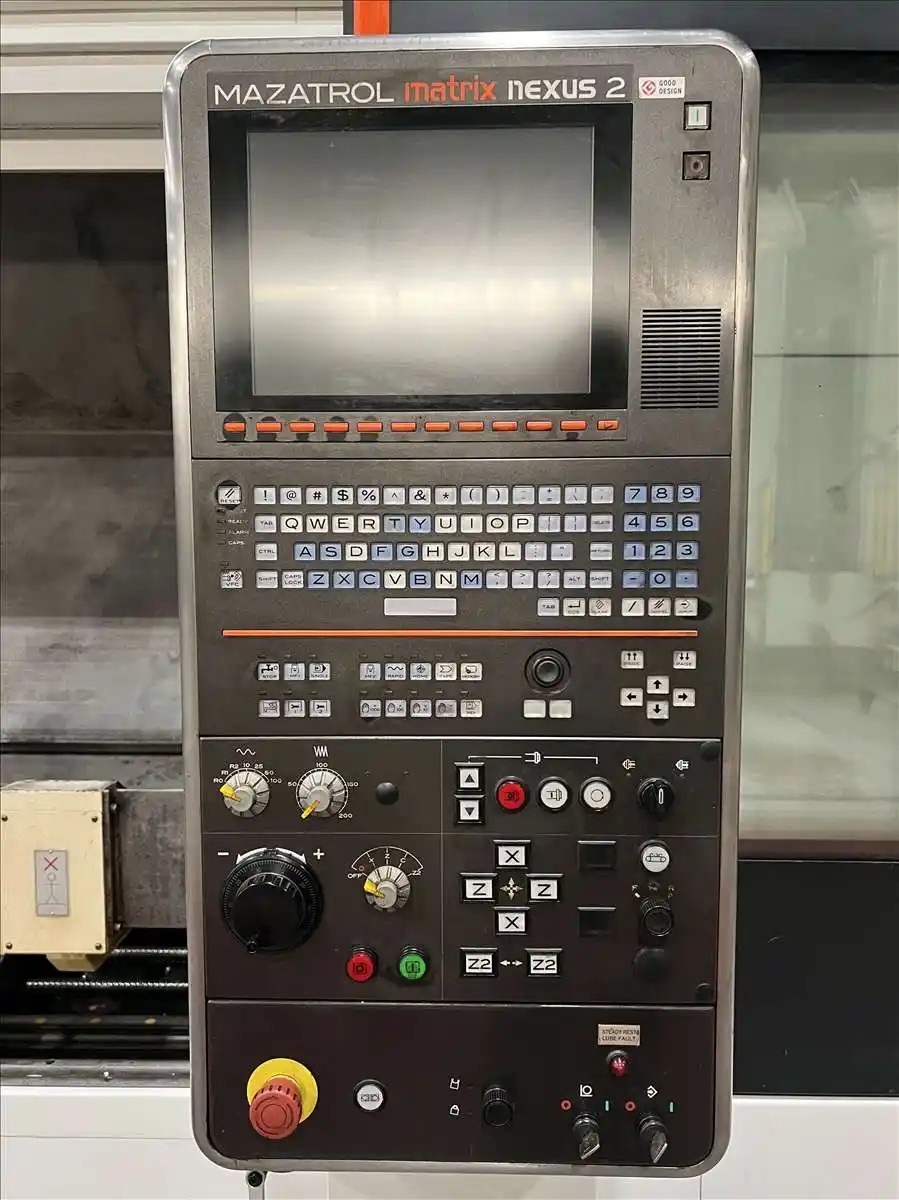
Older and bigger machines need this even more. Our Mazak Slant Turn Nexus 550 (2013) is a big-bore lathe with 120″ between centers, a 24″ 3-jaw chuck, a 10.75″ hole-through spindle, a power steady rest, and a power tailstock. The listing shows 21,034 power-on hours and 6,688 cutting hours. A machine like that is worth buying when the hours, the iron, and the control all check out. That is hard to do from a catalog page.
Refurbished vs as-is: know what work was done
Auction machines come straight off someone else’s floor. Some dealer machines get work before they are sold. If a seller says “refurbished,” ask for the list of what was done. A real list names parts and alignments. A vague one says “gone through.”
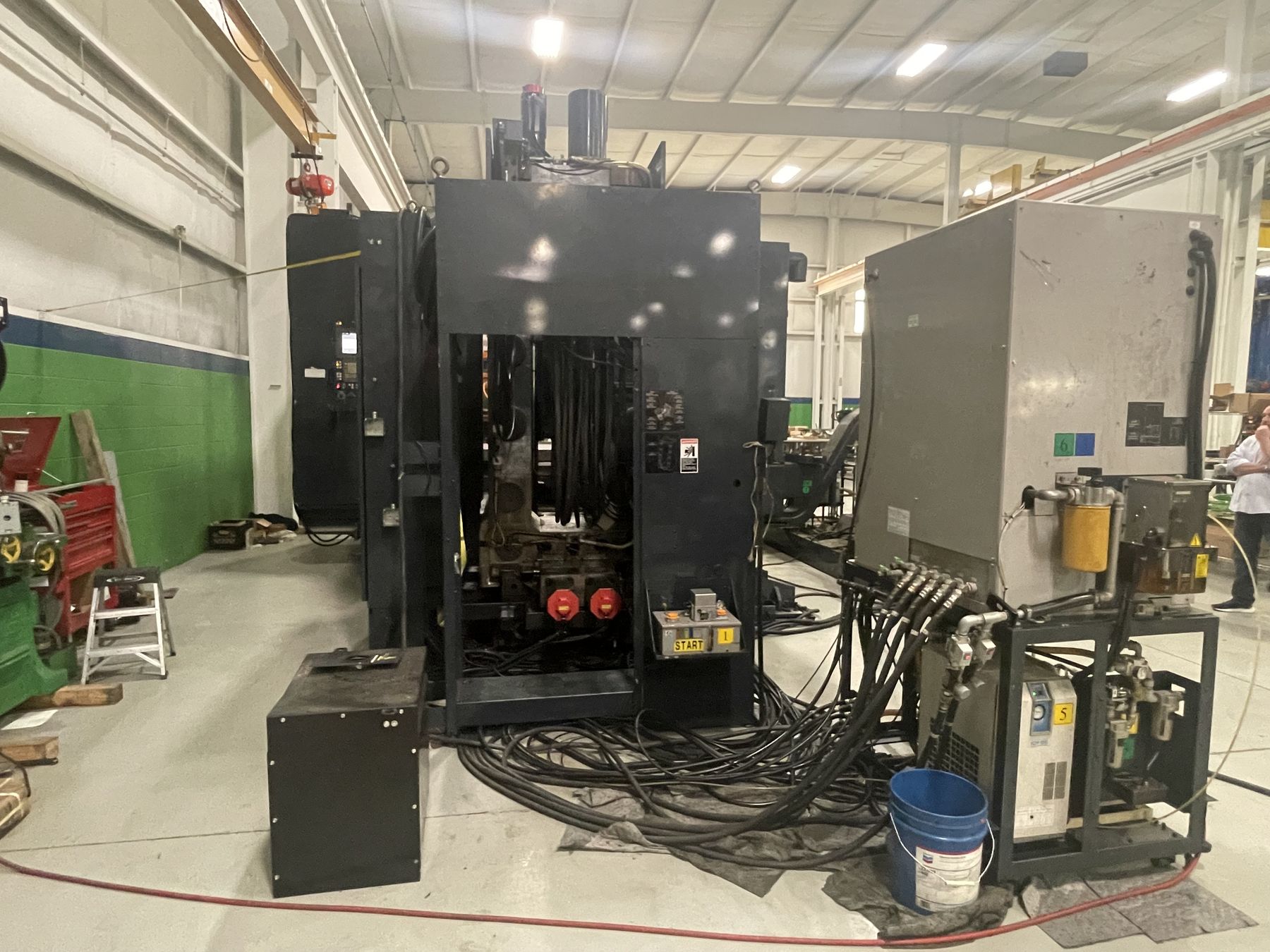
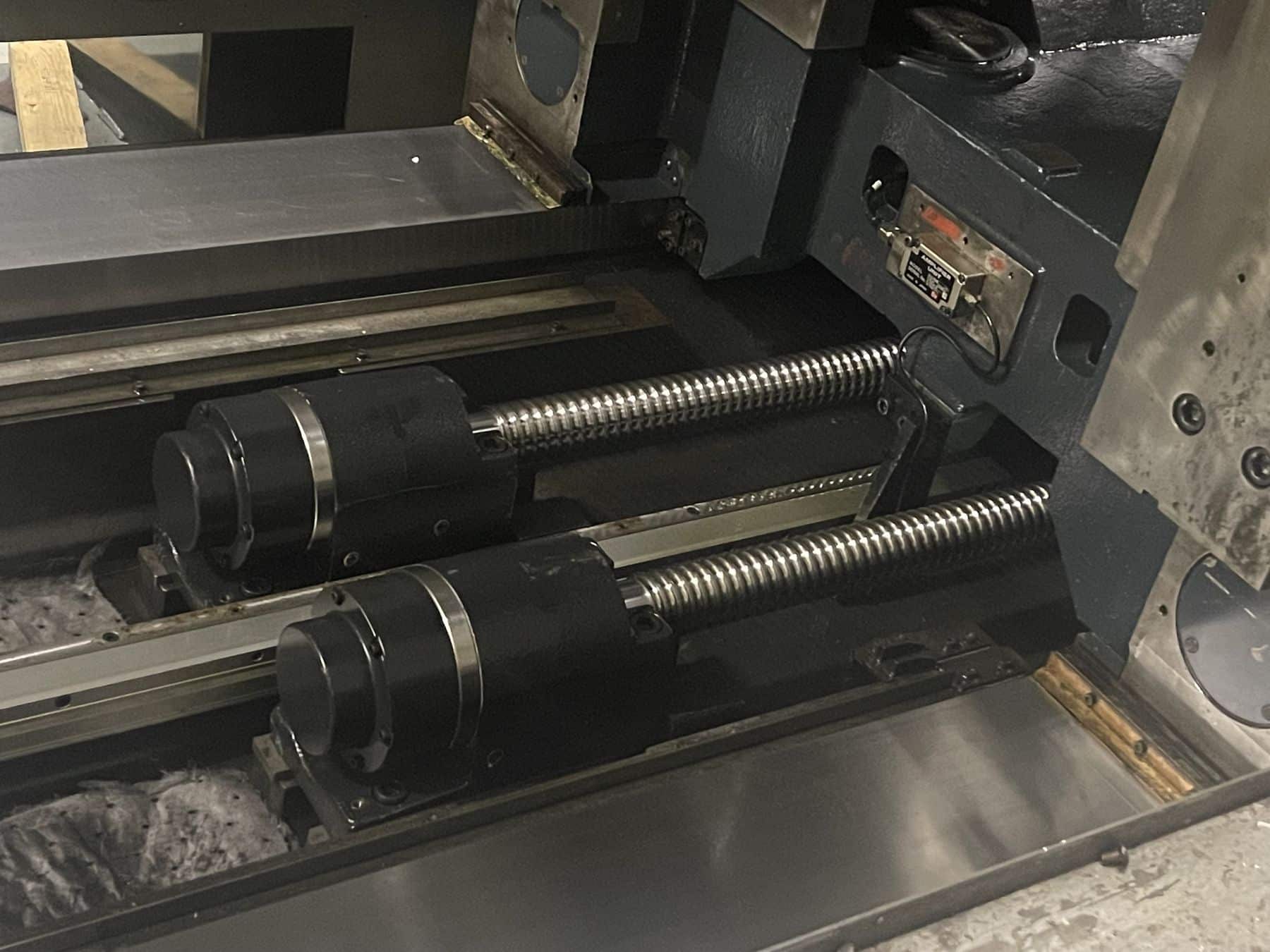
Our Makino MCC-2013VG horizontal machining center (2012, refurbished in 2024) has a specific list on the listing: Turcite replacement with scraping and alignment of X, Y, and Z, rebuilt Y and Z ball screws, reground precision casting surfaces, new wipers and gaskets, and run-out and alignments checked after reassembly. It has a 59″ x 47″ table, a 40 HP 12,000 RPM spindle, a 60-tool ATC, the Makino Pro 5 control, coolant through the spindle, a full 4th-axis rotary table, Renishaw probing software, and a Blum laser tool presetter.
When an auction makes sense
Auctions are not a bad place to buy. They work best when:
- You can attend the preview and bring someone who knows the machine.
- You have your own rigger and can meet the removal deadline.
- You can fix what you find, or the machine is simple enough that surprises are cheap.
- You set a hard ceiling that already includes the premium, rigging, freight, and a repair budget.
When a dealer makes more sense
- The machine is a big-dollar spindle you need making parts soon, not after a repair.
- You want to see it under power or cut a part before you pay.
- You want one place to ask about hours, options, tooling, and shipping.
- You are buying from out of state and cannot fly in for a preview day.
Shot list to ask for, auction or dealer
- Wide shot of the machine under power, with the control lit
- Timer page on the control (power-on, run, and cutting hours)
- Work area: spindle or chuck, turret or tool changer, and ways
- Control screen showing options and any alarms
- Data plate with model and year
- Electrical cabinet with the door open
If a seller will not send these, that tells you something. For the full inspection list, see what to inspect before you buy a used CNC. Shopping mills? Read our used VMC buying guide.
Shop what is live, or sell us yours
Buying? Browse used CNC lathes, used CNC horizontal machining centers, and the full used machinery inventory. Stock turns, so if you do not see what you need, ask.
Thinking about sending your machine to auction? Get a dealer number first. Start at sell machinery with the make, model, year, hours, control, and whether it runs. Here is how a dealer buy compares to consignment.
Sign Up for Our Newsletter
Sign up for our newsletter using the form below to get company insights and updates directly in your inbox!